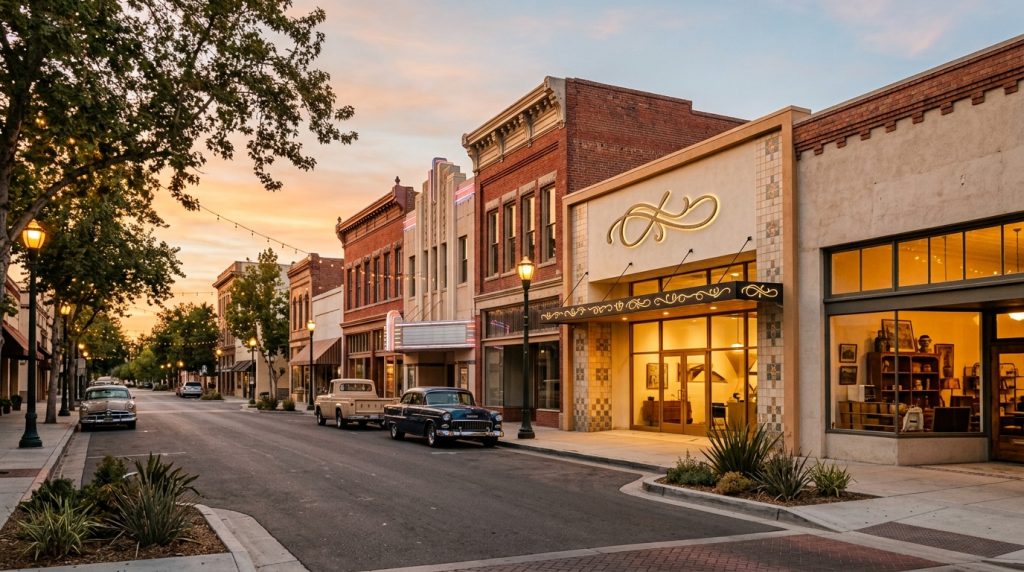
That is why preservation has become such an important topic for Bakersfield. The city has historic districts, aging commercial blocks, restored landmarks, and neighborhoods like Old Town Kern that still carry deep cultural meaning. For readers who enjoy museums, art, architecture, local history, and family-friendly learning, downtown preservation is part of the same conversation.
This article is part of our Local History section. You may also enjoy our guide to museums and cultural places in Bakersfield and our article about the Bakersfield art scene.
Why Historic Downtown Bakersfield Still Has Cultural Value
A city’s history does not only live inside a museum. It appears in storefronts, signs, sidewalks, railway corridors, theaters, cafés, public art, old hotels, and family-owned businesses that have survived changing times. Downtown Bakersfield matters because it gives people a place to see those layers in real life.
Preservation is not about freezing a city in the past. Good preservation gives old places a new purpose while keeping their identity intact. A historic building can become a restaurant, gallery, office, event space, cultural venue, or community gathering place. The goal is not to make everything look old. The goal is to keep what gives a place character while allowing the city to keep moving forward.
Bakersfield has a complicated downtown story. Earthquakes, suburban growth, vacant buildings, fires, neglect, and changing business patterns have all affected the urban core. Still, the remaining historic places show why the area is worth protecting. They give downtown a texture that new construction cannot easily copy.
Woolworth’s shows how one building can change a block
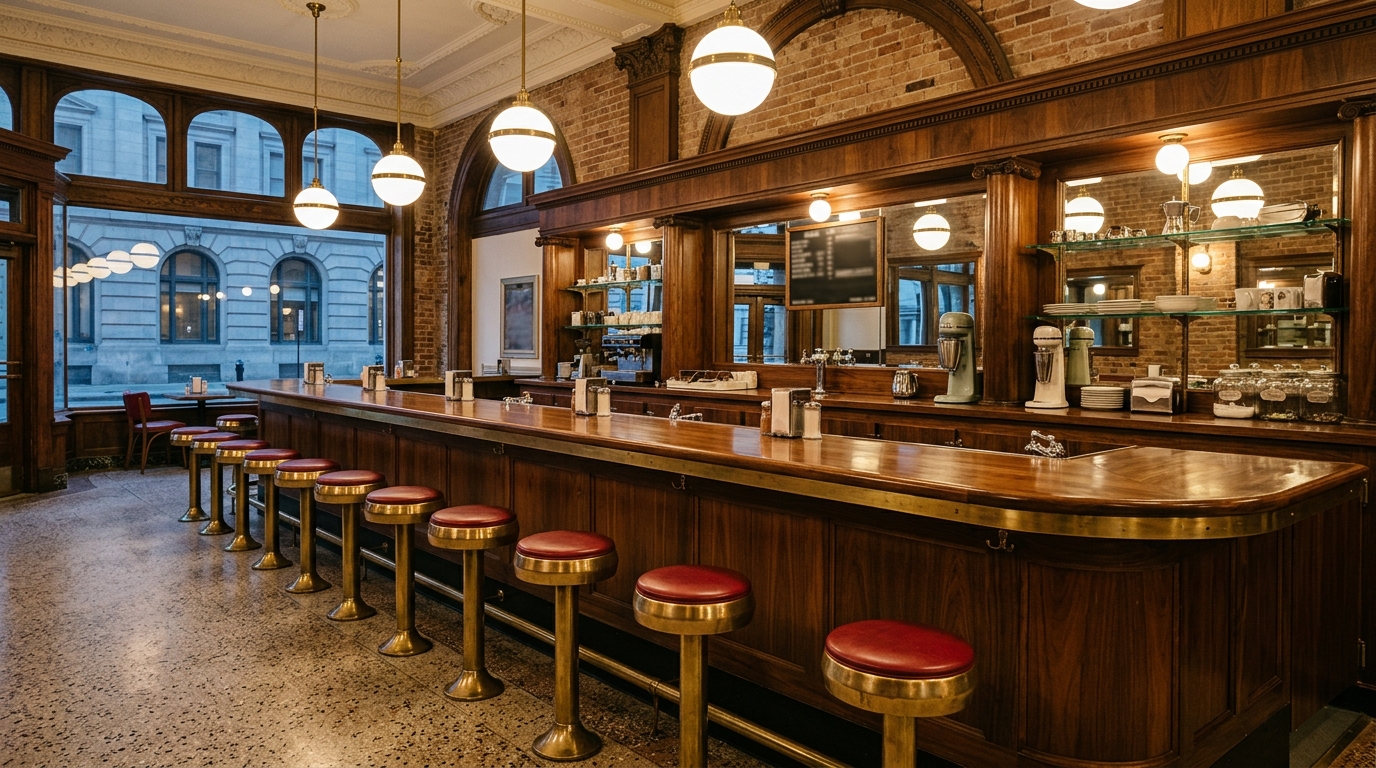
The Woolworth’s Building has become one of the clearest examples of why preservation matters in Bakersfield. Its restored lunch counter, midcentury details, and renewed public life show how a landmark can become more than nostalgia. It can become an anchor for new activity.
For many people, Woolworth’s represents memory. It recalls a time when downtown department stores, lunch counters, retail blocks, and pedestrian activity shaped everyday city life. For others, the building represents possibility. It shows that an old structure does not have to stay empty, forgotten, or treated as a problem. With vision, investment, and care, it can become useful again.
The official Woolworth’s renovation page describes the restoration as a balance of preservation and continuity, including work around the Luncheonette, Late Moderne architectural details, and preserved terrazzo flooring. Readers can learn more directly from The Woolworth’s Building renovation page.
The lunch counter as living memory
A restored lunch counter is powerful because it is both ordinary and historic. It is ordinary because people understand what a lunch counter is. They can picture coffee, conversation, stools, service, and a busy midday rhythm. It is historic because lunch counters across the United States became connected to retail culture, downtown life, and civil rights memory.
That combination makes Woolworth’s more than a design project. It is a cultural object people can walk into. Visitors do not only look at the building from outside. They can experience the space, notice the materials, sit down, and imagine how the building once functioned as part of downtown life.
Adaptive reuse makes preservation practical
Adaptive reuse is one of the strongest tools for saving historic buildings. Instead of asking whether an old structure should remain exactly as it was, adaptive reuse asks how it can serve people now. That may mean adding offices, food service, event space, retail, galleries, or community programming while keeping meaningful architectural features.
This approach matters for Bakersfield because many older buildings need a reason to survive. Sentiment alone rarely saves a structure. A building needs maintenance, occupancy, safety improvements, and people who use it. When preservation and business activity work together, the result can support both memory and economic life.
Old Town Kern connects downtown history with immigrant memory
Old Town Kern is another important part of Bakersfield’s preservation conversation. It carries stories connected to rail travel, Basque immigration, food culture, boardinghouses, working communities, and East Bakersfield identity. This is the kind of neighborhood where history is not only found in one landmark. It is spread across streets, buildings, restaurants, archives, and family memory.
According to CSU Bakersfield’s Historical Research Center, Kern County’s Basque community has been tied since the early 1890s to the East Bakersfield area now known as Old Town Kern, near the old Southern Pacific Railroad Depot. That background gives the neighborhood cultural importance beyond architecture alone.
The City of Bakersfield’s Old Town Kern Vision Plan is especially relevant because it shows that local leaders are thinking about how to revitalize one of the city’s oldest and most historic communities. For readers, this makes Old Town Kern a topic worth following, not just a place to mention in passing.
Sumner Station and arrival stories
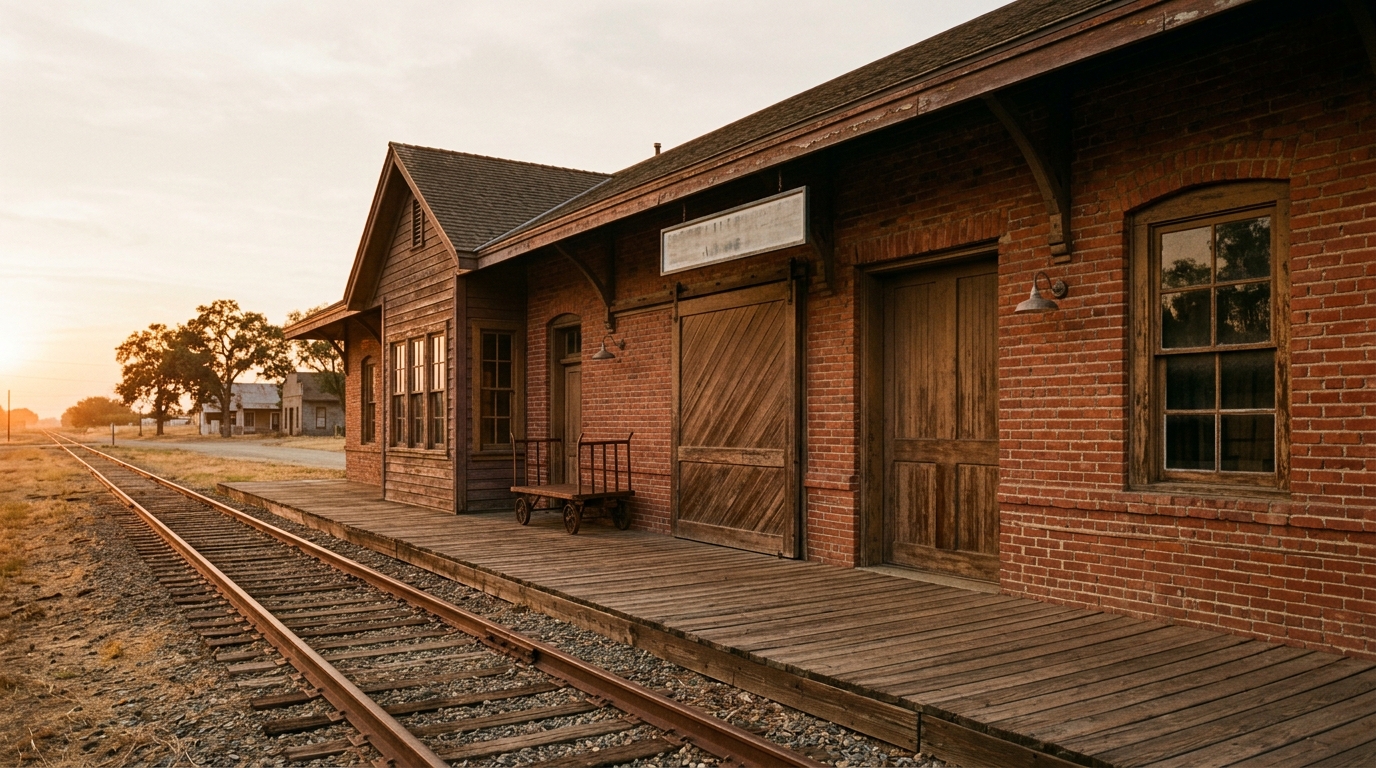
Railroad stations are powerful historic places because they represent movement. People arrived, left, worked, waited, reunited, and began new chapters through these spaces. In a city like Bakersfield, rail history also connects to migration, labor, agriculture, and the development of neighborhoods around transportation routes.
Sumner Station matters because it helps explain Old Town Kern as a place of arrival. When a community forms around a depot, nearby businesses, boardinghouses, cafés, and social spaces often follow. That is how transportation history becomes neighborhood history. The building is not only about trains. It is about the people who came through and the communities that grew around them.
How Preservation Can Become a Better Visitor Experience
Historic preservation becomes more meaningful when people know how to experience it. A visitor does not need to be an architect or historian to appreciate downtown Bakersfield. You only need to slow down and look for clues: old materials, restored signs, building shapes, doorway details, tile, brick, murals, railroad traces, and streets that feel different from newer commercial areas.
For a museum-inspired day, pair a downtown walk with a formal cultural stop. Start with a museum or art space, then visit a restored building, a historic district, or a local business in an older neighborhood. This creates a stronger experience because you can connect objects, buildings, and stories in one route.
Preservation also supports local identity. Many cities can build new shopping centers, but only Bakersfield has Bakersfield’s specific collection of downtown memories, historic corridors, Central Valley stories, Basque influences, music roots, and surviving landmarks. That uniqueness is worth protecting because it gives the city its own voice.
How to explore historic Bakersfield respectfully
Historic neighborhoods are not theme parks. They are real places where people live, work, worship, eat, struggle, invest, and build community. When exploring older areas, be respectful. Support local businesses, avoid blocking sidewalks, do not trespass, and remember that vacant buildings can be unsafe. Take photos from public areas and follow posted rules.
It is also important to avoid romanticizing decay. An old building may look interesting in a photograph, but neglect often represents real community challenges. Good preservation is not about enjoying ruins. It is about finding responsible ways to repair, reuse, document, and protect places before they are lost.
A respectful culture-day route
A simple route could begin with a morning museum visit, continue with lunch or coffee in downtown Bakersfield, then include a short walk around historic blocks with attention to restored storefronts and older architectural details. Later, readers interested in deeper history can explore Old Town Kern stories, Basque food culture, and local preservation updates.
Families can turn this into an educational outing by asking children to identify three things: one old detail, one restored feature, and one question about the past. Adults can do the same exercise. The point is to train the eye to notice history in everyday places.
Historic downtown Bakersfield matters because it gives the city continuity. Woolworth’s shows how restoration can bring a building back into public life. Old Town Kern shows how immigration, rail travel, food culture, and neighborhood identity can remain visible across generations. Together, these places remind readers that local history is not abstract. It is built into walls, counters, streets, signs, stations, and stories.
As Bakersfield grows, preservation will remain a serious question. The city can either lose more historic places or find creative ways to reuse them. The better path is clear: protect what gives Bakersfield character, make old buildings useful again, and help residents and visitors understand why these places matter.