The San Joaquin Valley is shaped by land, water, farming, and constant change. Those same forces also shape the art now on view at the Bakersfield Museum of Art.
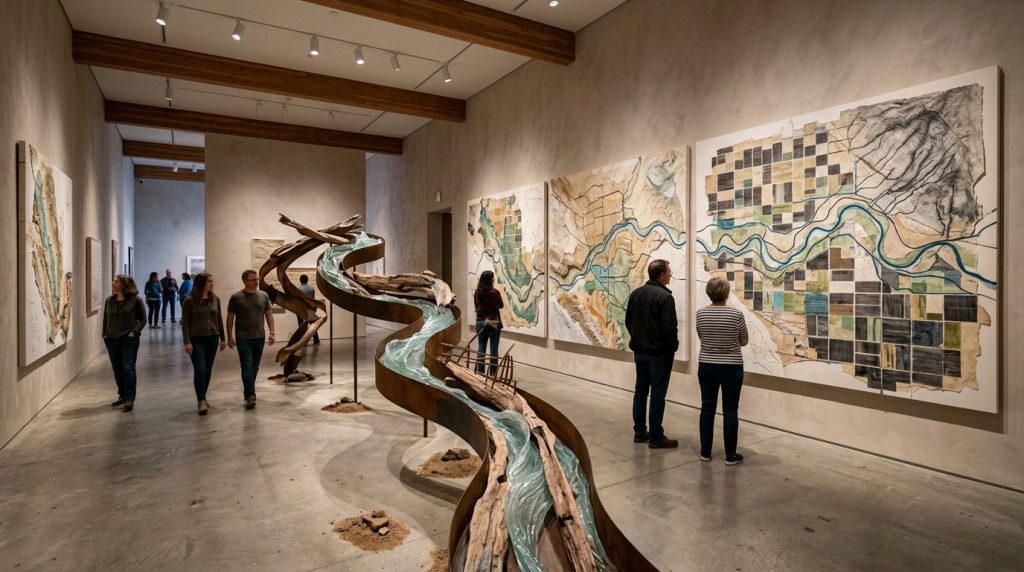
Ann Diener: The Invented Land is a current solo exhibition that looks at the past, present, and future of the San Joaquin Valley. The show runs through August 29, 2026. It brings together drawing, sculpture, and installation to explore agriculture, water use, infrastructure, environmental change, and memory.
The exhibition feels especially relevant in Bakersfield because these subjects are part of daily life across Kern County. Canals, farms, dry landscapes, river systems, roads, and development all leave visible marks on the region.
Diener turns those familiar systems into layered visual stories. Her work includes maps, diagrams, plant forms, architectural lines, and references to water. The Bakersfield presentation also includes new work inspired by the Kern River.
For more background on these themes, read our guide to agriculture, water, and art in Bakersfield culture.
Why The Invented Land Feels So Connected to Bakersfield
The Invented Land feels especially suited to Bakersfield. Its focus on the San Joaquin Valley gives the local setting extra weight.
Roads cross fields. Canals move water across long distances. Farms shape the edge of the city, while the Kern River carries its own history and memories.
Diener looks beyond scenery to the systems behind it. Her work asks viewers to notice how people manage, build on, and change land over time. Bakersfield visitors can compare those ideas with places they already know.
Maps, Agriculture, and Memory Build the Visual Language
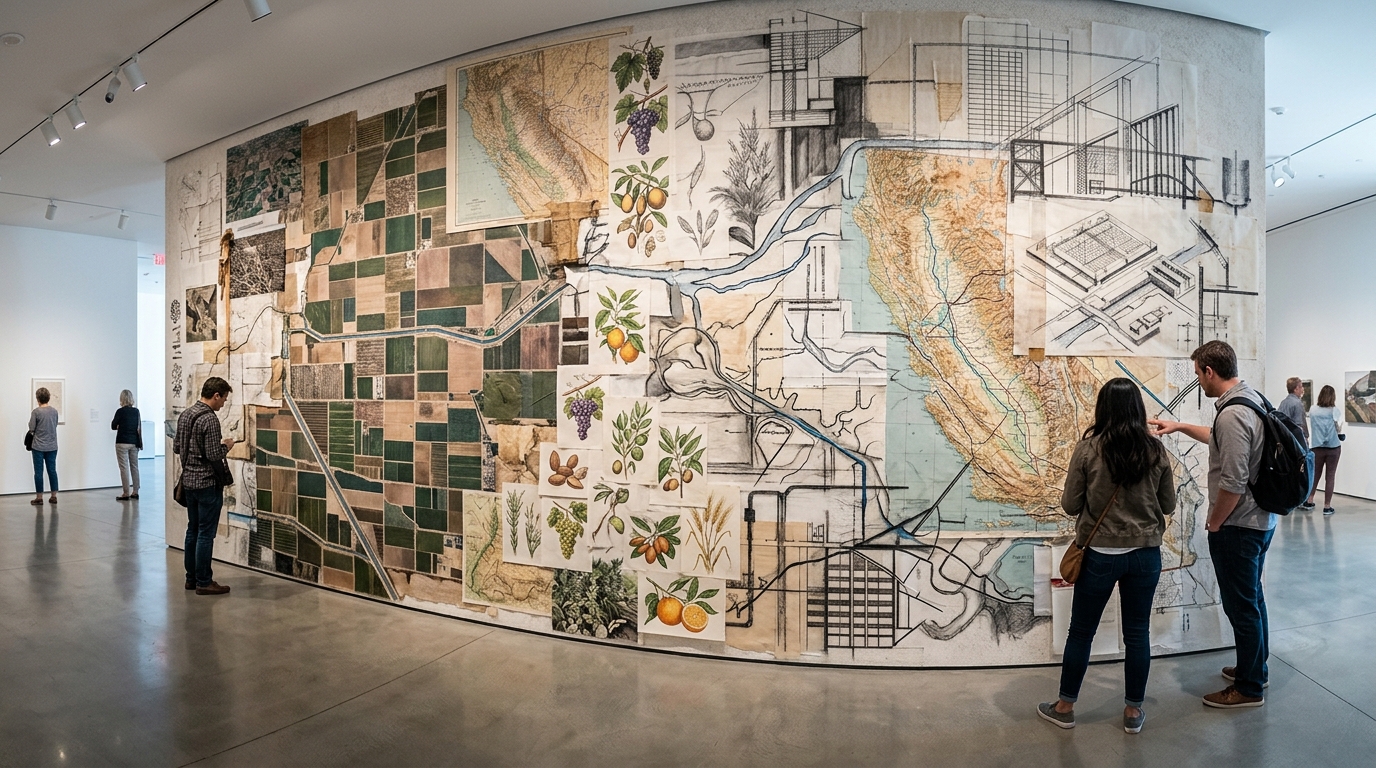
Diener comes from a California farming family. That personal history helps shape the way she looks at the valley. Her work does not present agriculture as only an industry. It also treats it as a family story, a land-use system, and a source of cultural memory.
Many of her works combine different kinds of information. Maps may sit beside botanical images. Architectural lines can overlap with drawings. Historical references may appear beside modern systems.
The result can feel like several timelines placed on top of each other. Viewers may see nature, planning, agriculture, and memory at the same time.
This approach fits the Central Valley well. The landscape may look simple from a highway, but farms, irrigation, towns, transportation, and development all shape what we see today.
Greenhouse Turns a Familiar Farm Structure Into Art
One of the key works in the exhibition is Greenhouse, created in 2023. The walk-in sculpture uses steel, acrylic, and beaded elements.
A greenhouse is normally a practical structure that controls growing conditions. In a museum, the same form can raise questions about farming, nature, and human control.
The scale matters too. Because visitors can enter the work, the ideas feel more physical. Diener turns a familiar farm structure into a way to think about land, work, and design.
Liquid Gold Connects Water to Value and Scarcity
Another major work, Liquid Gold, refers to the loss of water from regional aquifers. Its title immediately connects water with value.
That idea is easy to understand in the Central Valley. Water supports farms, cities, homes, and ecosystems. When supplies tighten, decisions about water matter even more.
Diener’s work is not a technical report. Art approaches the issue differently. It can turn maps, data, and environmental change into something people see and feel.
Our article on public art and creative spaces in Bakersfield explores a similar idea. Art can change how people notice familiar streets, buildings, landscapes, and local issues.
The Kern River Gives the Exhibition a Strong Local Layer
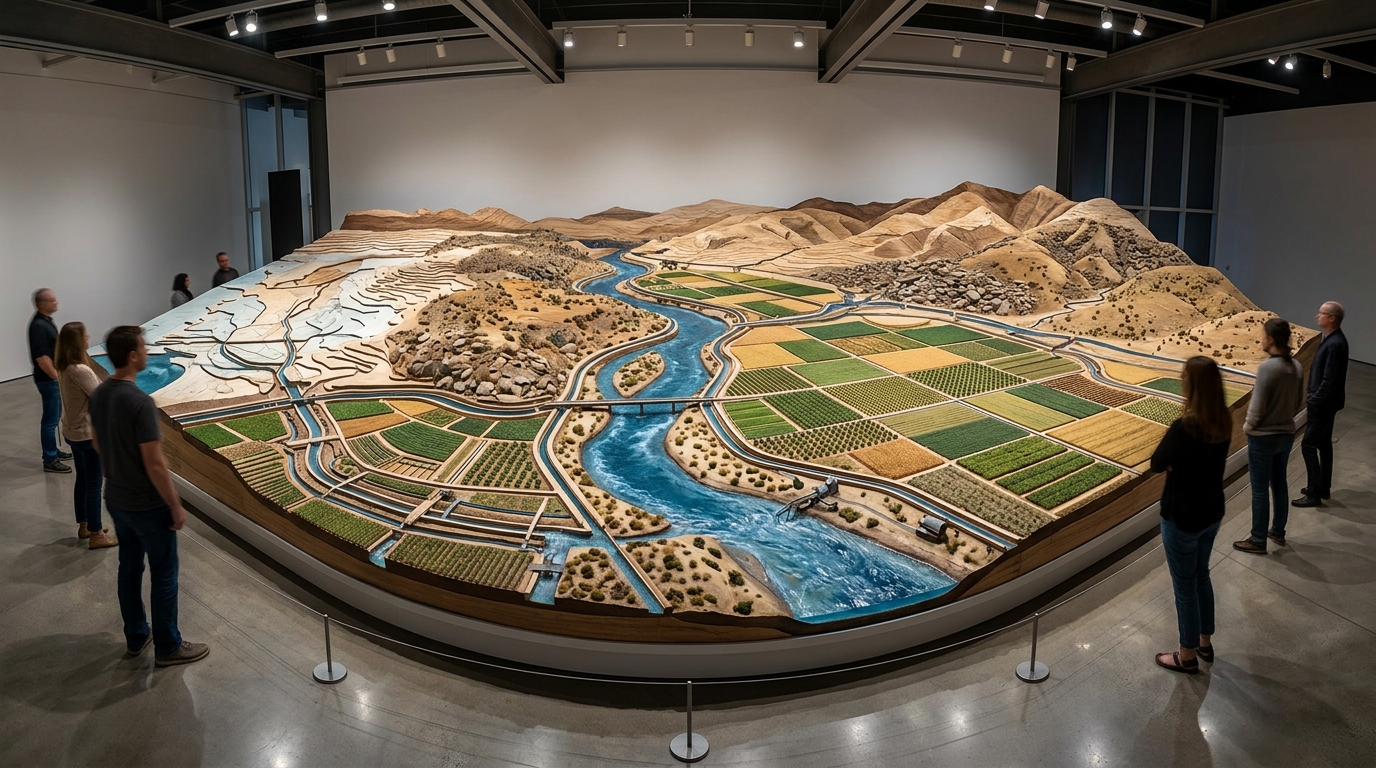
The Bakersfield Museum of Art presentation includes new site-responsive work inspired by the Kern River. That detail gives the exhibition an even closer link to the city.
The Kern River is more than a geographic feature. It is part of Bakersfield’s identity and regional history. People connect it with recreation, water, development, and memory.
Using the river as an artistic subject connects Diener’s wider San Joaquin Valley ideas with Bakersfield. The work also raises a simple question: how much of the landscape is natural, and how much reflects human choices?
Site-Responsive Art Makes Place Part of the Exhibition
Site-responsive art reacts to the location where people experience it. The work may use local history, geography, architecture, or community stories as part of its meaning.
In Bakersfield, the Kern River gives Diener a clear local reference. That helps the exhibition speak directly to people who know the area.
A visitor who has walked beside the river or watched its water level change may bring personal memories into the gallery. Regional art becomes stronger when the audience brings local knowledge.
The museum also gives visitors time to look slowly. A river may pass by in seconds from a car window, while a drawing can hold attention much longer.
That local connection can help first-time visitors understand contemporary art. Instead of asking what a work is “supposed” to mean, they can start with familiar details. A line may resemble an irrigation route. A layered map may recall the way roads, farms, and waterways overlap across Kern County. From there, viewers can think about why the artist combined those forms and what changes they represent.
How to Get More From a Visit to The Invented Land
You do not need a background in contemporary art to enjoy this exhibition. Start with what you recognize.
Look for maps, plants, water patterns, grids, buildings, or farm-related forms. Notice where images overlap and ask why the artist placed them together.
Do not rush. Step close to see small details, then move back to view the full structure. Ask which works remind you of Bakersfield, farming, water, or the river.
The official Bakersfield Museum of Art exhibition page for Ann Diener: The Invented Land provides current information about the show and related programs.
Make the Exhibition Part of a Larger Bakersfield Culture Day
A visit can become more meaningful when you connect the exhibition with the city outside.
After the museum, notice canals, open land, the Kern River, older neighborhoods, and places where Bakersfield meets agriculture. You can also pair the museum with public art or downtown history.
If you are visiting with children, keep the questions simple. Ask them to find one map, one plant shape, and one pattern that reminds them of water. Small prompts can make contemporary art easier to approach.
Families can also use our family-friendly museum day in Bakersfield to build a relaxed plan around art, history, and other cultural stops.
August 22 Offers a Chance to Hear From the Artist
Visitors who want more context have a timely opportunity before the exhibition closes.
The Bakersfield Museum of Art has scheduled An Afternoon with the Artist: Ann Diener for Saturday, August 22, 2026, from 2:30 p.m. to 4:30 p.m. The program will include Diener in conversation with art critic and catalogue contributor Shana Nys Dambrot.
The program will explore Diener’s drawing and installation practice, followed by a question-and-answer session and reception. It comes one week before the exhibition’s scheduled August 29 closing date.
Event details can change, so check the museum’s official calendar before making plans.
The Invented Land works well in Bakersfield because its subjects are already part of the region. Land, agriculture, water, infrastructure, and the Kern River shape places people see every day.
Diener’s art asks viewers to look again. Maps become drawings. Farm structures become sculpture. Water becomes both a resource and a cultural symbol.
The result feels both contemporary and familiar. You may leave thinking differently about a canal, field, map, or the river itself. Art can take something we see all the time and make us notice it again.
Editor’s note: Bakersfield Museum Guide is an independent cultural guide and is not affiliated with the Bakersfield Museum of Art. Exhibition dates, event details, admission, and hours can change. Confirm current information with the museum before visiting.