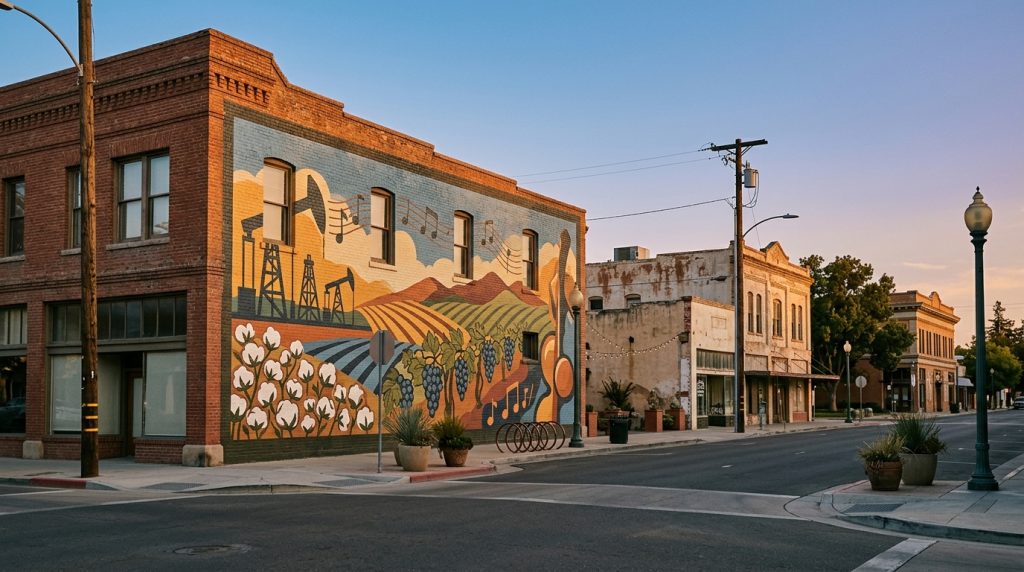
Public art matters because it does not wait for people to enter a museum. It appears on walls, sidewalks, storefronts, utility boxes, alleys, and community spaces. That makes it one of the most accessible forms of local culture. A person can discover a mural while walking to coffee, driving through downtown, attending an event, or exploring a neighborhood for the first time.
This guide is part of our Art & Exhibitions section. You may also enjoy our articles about the Bakersfield art scene, museums and cultural places in Bakersfield, historic downtown Bakersfield, and Central Valley culture, agriculture, water, and art.
Before planning a public art walk, check current event pages, gallery hours, and downtown updates. Public art is easier to enjoy when you allow time to walk slowly, look carefully, stop for local businesses, and move safely through active city streets.
Why Public Art Matters in Bakersfield
Public art helps Bakersfield tell stories in places where people already live and move. A mural can honor youth voices, celebrate a neighborhood, show regional landscapes, reference music, or bring color to a plain wall. A painted signal box can turn an overlooked corner into a small moment of discovery. A downtown gallery can give local artists a place to be seen.
The value of public art is not only visual. It can create pride, support foot traffic, encourage photography, help visitors navigate districts, and connect people with local identity. For a city like Bakersfield, where culture includes agriculture, music, migration, public memory, working neighborhoods, and Central Valley landscapes, murals and creative spaces can make those themes easier to notice.
Public art also helps connect museums with the street. A visitor might start inside a gallery, then continue outside to find murals and public installations. That movement is important because culture should not feel locked inside one building. The strongest cities make art part of daily life.
Start downtown with walkable art stops
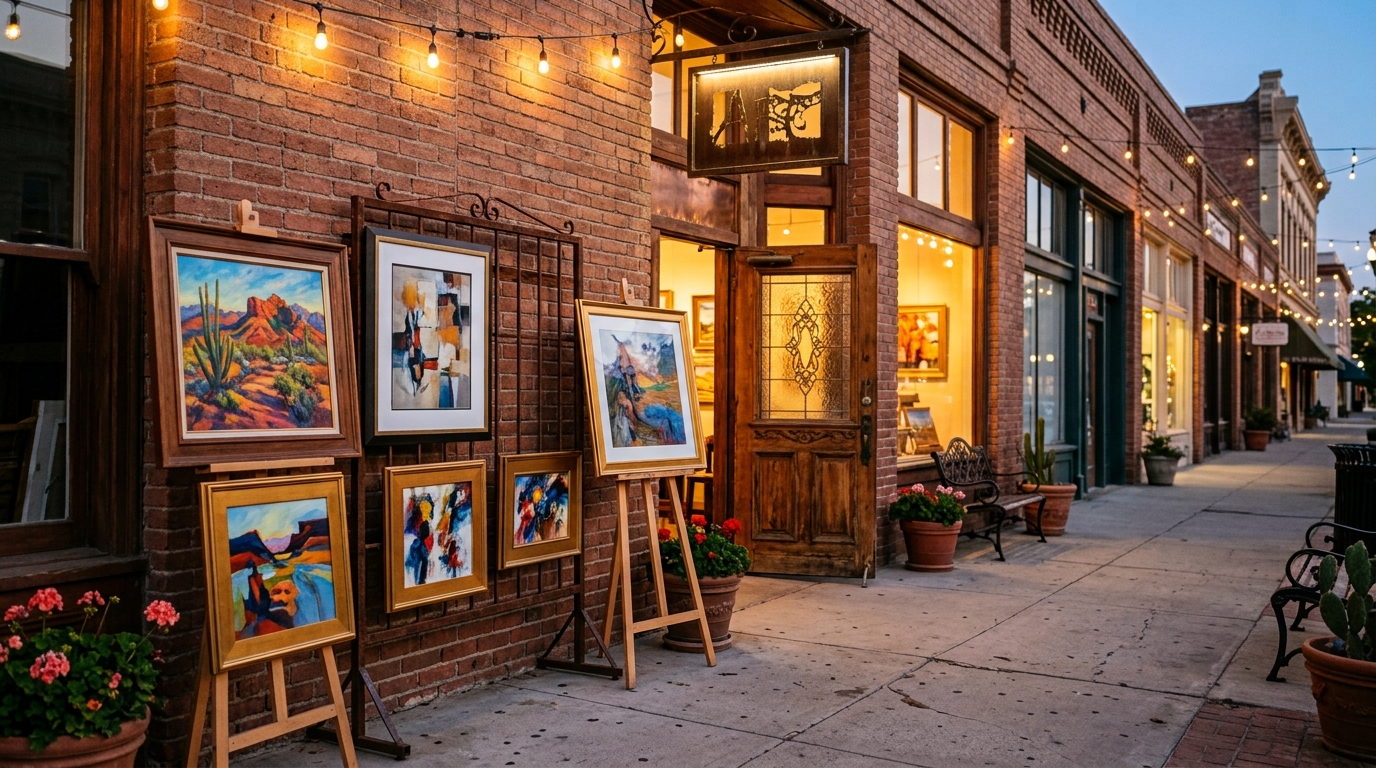
Downtown Bakersfield is one of the easiest places to begin because it connects public art, galleries, restaurants, coffee, music, older buildings, and local events. A walkable downtown route lets visitors experience art in context. Instead of only seeing one wall, you see how art interacts with storefronts, sidewalks, historic blocks, and community activity.
Visit Bakersfield promotes ArtTrek as a public art walking tour through downtown. The route highlights paintings, murals, sculptures, painted signal boxes, galleries, and other art stops. For readers who want a practical starting point, the official Visit Bakersfield ArtTrek guide is a useful external resource.
ArtTrek makes public art easier to find
A common problem with public art is that people do not know where to begin. ArtTrek solves that problem by giving visitors a route and a reason to look closer. Instead of randomly searching for murals, you can follow a guide, choose a few nearby stops, and build a simple walk around the pieces that interest you most.
This kind of route is especially helpful for first-time visitors. It gives structure without making the experience feel formal. You can move at your own pace, stop for photos, step into galleries, support local restaurants, and create a culture day that feels personal rather than rushed.
First Friday adds community energy
First Friday ArtWalk gives public art a social rhythm. During art walk events, downtown becomes more active with artists, vendors, galleries, restaurants, shops, and music. This matters because art is not only about finished objects. It is also about meeting artists, seeing work in progress, talking with makers, and feeling how creative energy changes a street.
If you are new to the Bakersfield art scene, First Friday is a strong introduction. You can browse original work, discover local artists, visit nearby businesses, and experience downtown as a creative gathering place. For current event details, check local event calendars before going because schedules, locations, and participating vendors can change.
How to Explore Murals, Galleries, and Creative Blocks
A good public art day should include variety. Choose one mural area, one gallery or exhibition stop, one local business, and one historic block. This gives the outing balance. Murals provide color and street-level identity. Galleries provide context and close looking. Local businesses make the day practical. Historic blocks remind visitors that art belongs to a larger city story.
Do not treat murals only as photo backdrops. They deserve attention as artworks and community markers. Look at the subject, color, placement, scale, and message. Ask why the mural might be in that location and what it adds to the street. If the artist is credited, search their name and learn more about their work.
Galleries and studios deserve the same patience. Small creative spaces often support emerging artists, regional themes, experimental work, and community conversations. Even if you do not buy anything, visiting, sharing, and returning for new shows helps strengthen the local art ecosystem.
Look for creative spaces beyond the obvious
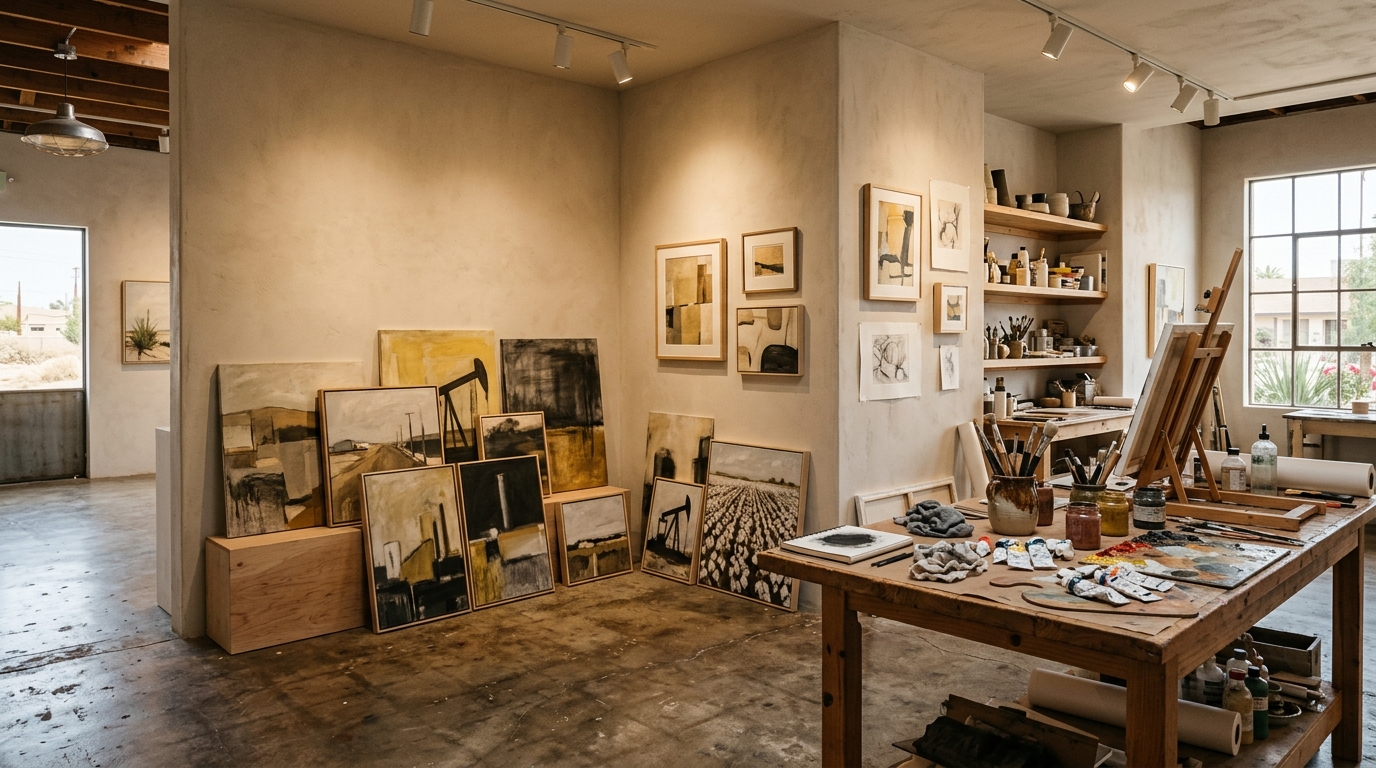
Some of Bakersfield’s most interesting creative moments happen outside the expected museum setting. A café wall, pop-up market, studio event, restored downtown building, alley mural, student project, or local business collaboration can reveal what artists are making right now. These spaces may not always appear in traditional travel guides, but they can show the city’s creative pulse.
Recent mural projects also show how public art can involve community voices. A 2025 Kern County Superintendent of Schools story described a Dream Center mural in downtown Bakersfield that included youth participation and added to the city’s public art landscape. Projects like this matter because they connect creativity with belonging, not just decoration.
Mural Alley and rotating street art culture
Rotating mural spaces are valuable because they keep a city’s art scene alive. Instead of treating public art as something permanent and finished forever, rotating walls allow new artists, new styles, and new themes to appear over time. This gives people a reason to return, compare, and keep paying attention.
When you visit mural areas, take respectful photos, avoid blocking doors or sidewalks, and remember that public art often sits beside active businesses and private property. The best visitors support the neighborhood instead of only using it as a backdrop.
Make public art part of a full culture day
Public art works best when it connects with other cultural stops. You can begin at a museum, follow a downtown public art route, visit a gallery, then end with a meal in a historic or creative district. This kind of route gives you a richer understanding of Bakersfield because it connects art, history, architecture, food, and community life.
Families can turn the walk into a simple activity. Ask children to find three colors, one animal or object, one painted box, and one artwork that tells a story. Adults can ask deeper questions about location, message, artist credit, and how the work changes the feeling of the block.
For photographers and content creators, public art offers strong visuals, but respect still matters. Do not climb on artwork, block entrances, damage walls, or ignore nearby residents and businesses. The artwork belongs to the public, but the space around it still deserves care.
A simple walking route idea
Start with a downtown coffee stop, then choose a few ArtTrek pieces within walking distance. Add one gallery or creative storefront, take time to notice painted signal boxes, and finish near a restaurant or local shop. If it is First Friday, adjust the route around the event area and give yourself extra time for vendors, music, and crowds.
This simple route works because it does not overcomplicate the day. You get art, movement, local business support, and downtown atmosphere in one plan. If you want a deeper visit, add the Bakersfield Museum of Art before or after the walk and compare how art feels inside a museum versus outside on the street.
Bakersfield public art is worth exploring because it makes local culture visible. Murals, galleries, painted signal boxes, First Friday events, and creative blocks all show different sides of the city. They bring color to downtown, support artists, encourage walking, and help residents and visitors see Bakersfield with more attention.
Use this guide as a starting point. Follow official art maps, check event calendars, support local artists, and return often. Public art changes the way a city feels, but only if people take time to notice it.