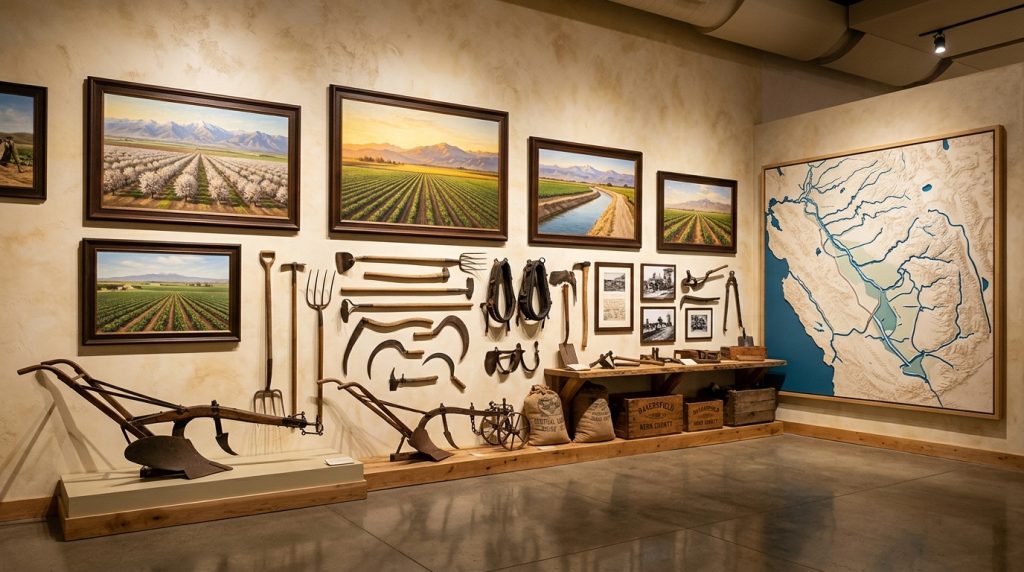
For museum lovers, this connection matters. A painting of farmland is not just a landscape. An old irrigation map is not just a technical document. A historic tool is not just a farm object. These things help explain how Bakersfield became the place it is today. They show the relationship between people, soil, labor, water, and creativity.
This guide is part of our Local History section. For more cultural context, read our articles about museums and cultural places in Bakersfield, the Bakersfield art scene, historic downtown preservation, and family-friendly museum days in Bakersfield.
Why Agriculture and Water Belong in Bakersfield’s Cultural Story
Agriculture is one of the clearest ways to understand Bakersfield and Kern County. Fields, orchards, packing operations, farm labor, irrigation routes, equipment, markets, and seasonal rhythms all influence the local identity. Even people who do not work directly in agriculture still live in a region shaped by it.
The Central Valley has long been one of California’s most important agricultural regions. Its scale is difficult to separate from water. Crops need reliable water, and communities depend on systems that move, store, conserve, and manage that water. This is why agriculture and water are not separate subjects in Bakersfield. They are connected parts of one regional story.
For a museum-style blog, these themes create useful article topics. You can write about old farm tools, crop history, irrigation, local food culture, drought, labor stories, family farms, agricultural photography, and landscape art. Each topic helps readers see Bakersfield as more than a city name. It becomes a living cultural region.
Agriculture is more than an industry
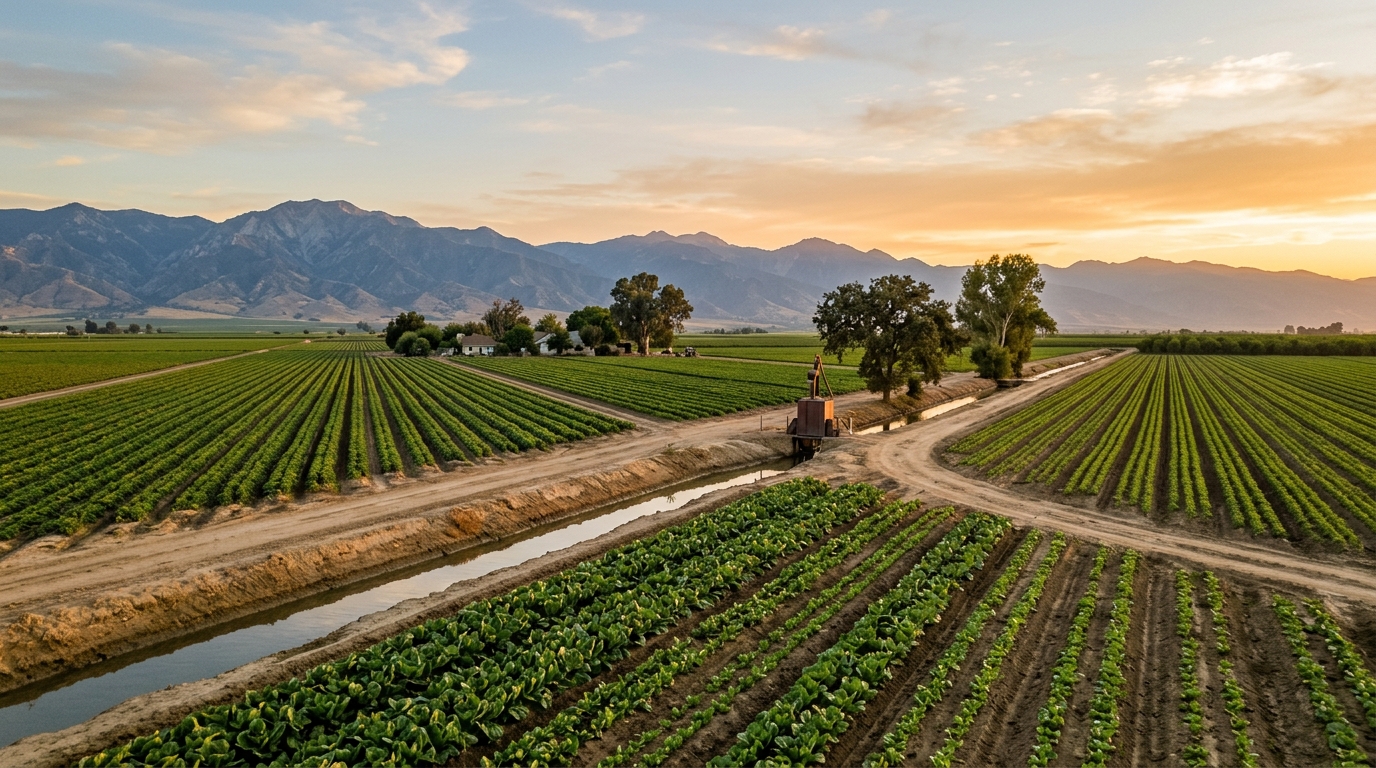
When people hear the word agriculture, they often think only about crops and money. That is too narrow. Agriculture also shapes daily life, family history, neighborhood growth, school calendars, food traditions, transportation, community events, and public memory. In Bakersfield, farm culture is part of the background of many local stories.
A museum or local culture guide can make this easier to understand by connecting objects to people. A tractor, crate label, pruning tool, irrigation diagram, or old harvest photograph becomes more powerful when readers understand who used it and why it mattered. Objects become stories when they are placed inside human experience.
Kern County farms help define the local landscape
Kern County’s agricultural identity appears in the land itself. Rows of crops, orchards, open fields, canals, warehouses, and farm roads form a visual language that locals recognize quickly. These views are part of the region’s everyday scenery, but they are also cultural material. Artists photograph them, painters interpret them, historians document them, and families remember them.
Readers interested in official agriculture data can review the 2024 Kern County Agricultural Crop Report. Reports like this are useful because they show how deeply agriculture remains tied to the county’s economy and land use. For culture readers, the numbers are only the beginning. Behind those numbers are people, farms, weather, markets, water decisions, and long-term regional change.
Water is the invisible structure behind the scenery
Water is one of the most important but least visible parts of Bakersfield’s cultural story. Visitors may notice farms, but they may not immediately think about the water systems behind them. Irrigation, groundwater, rivers, canals, reservoirs, conservation, and drought planning all affect what the region can grow and how communities plan for the future.
California water is complex because it involves local needs, statewide systems, environmental concerns, agriculture, urban growth, and changing climate conditions. This complexity makes water a strong topic for educational content. It also gives museums and cultural writers a chance to explain how natural resources shape human communities.
Irrigation connects land, labor, and memory
Irrigation is not only a technical subject. It is part of how Central Valley landscapes became productive and recognizable. Canals, pumps, ditches, and water districts helped shape where farms developed and how communities grew. In a local history article, irrigation can become a bridge between geography and family memory.
For a simple visitor-friendly explanation of the Central Valley’s scale and water setting, the USGS overview of California’s Central Valley is a helpful source. For broader water basics, the California Department of Water Resources agriculture page explains how water systems connect with farming across the state.
How Art Turns Central Valley Life into Cultural Memory
Art helps people notice what they usually overlook. A field can become a composition. A water canal can become a symbol. A weathered tool can become a sculpture-like object. A family photograph can become a record of migration, labor, or neighborhood life. Through art, Bakersfield’s practical landscape becomes emotional and memorable.
This is why Central Valley art matters. It can show the beauty of land, but it can also show pressure, change, hardship, pride, and resilience. A landscape painting may seem peaceful at first, but it can also point toward deeper questions about water, growth, climate, work, and belonging.
For Bakersfield Museum Guide, this creates a strong editorial direction. The site can connect museum exhibitions, public art, local history, and agricultural themes in one place. That gives readers a richer view of the city than a basic travel list could provide.
Local art gives the landscape a voice
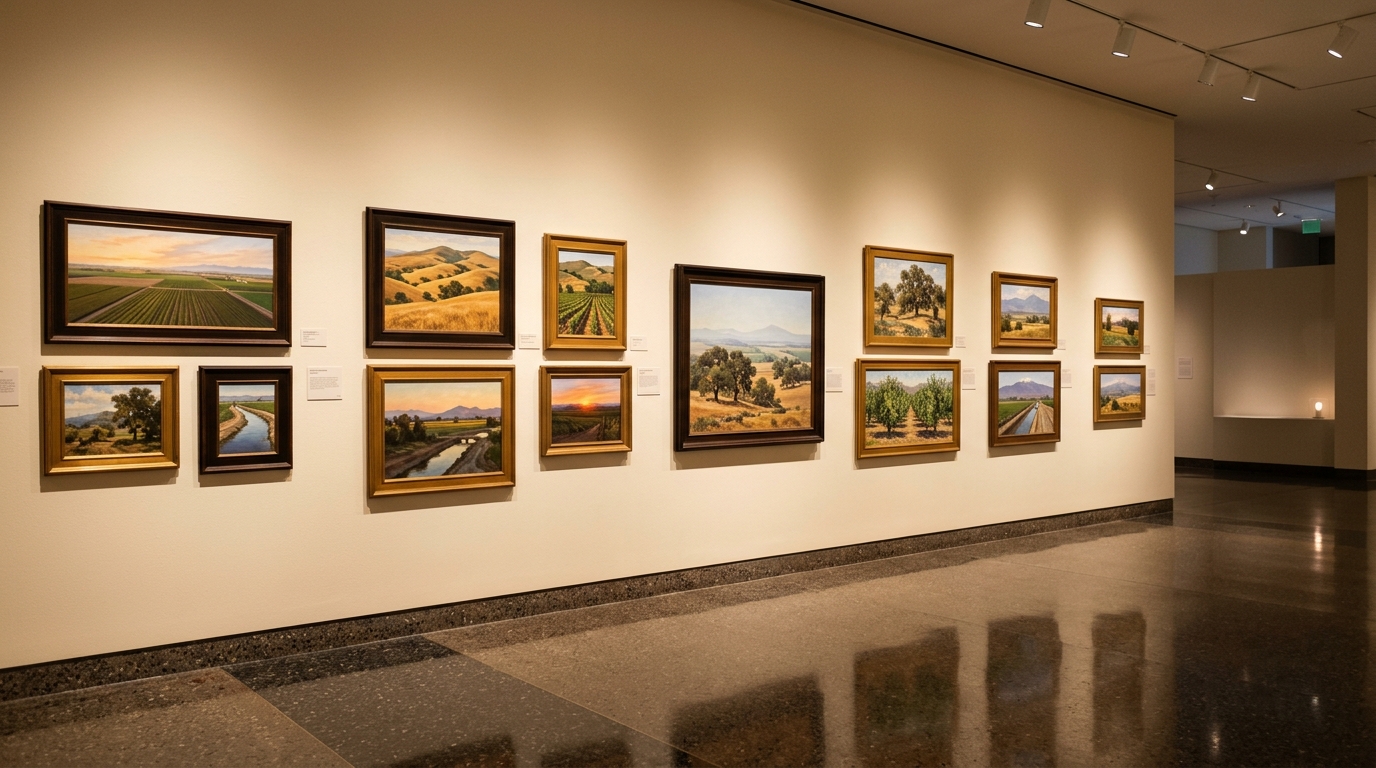
Artists often help communities understand themselves. In Bakersfield and the Central Valley, artists can interpret land, labor, neighborhoods, historic change, family archives, and everyday objects. They can turn familiar places into something worth studying again.
This matters because many Central Valley scenes are easy to take for granted. Locals may pass fields, canals, older buildings, murals, and industrial edges every day without seeing them as cultural subjects. Art slows people down. It tells viewers that ordinary places still deserve attention.
Central Valley landscapes belong in galleries and stories
Central Valley landscapes have appeared in museum and exhibition contexts because they carry strong visual and cultural meaning. The Bakersfield Museum of Art’s exhibition archive includes past shows connected to Central California landscapes and Central Valley painting themes. That history shows how regional land can become serious artistic subject matter, not just background scenery.
Readers can explore the museum’s official archive through the Bakersfield Museum of Art past exhibitions page. For this website, that kind of source can help support future articles about landscape art, local artists, exhibition history, and how Bakersfield’s environment appears in visual culture.
How to explore Bakersfield through land, water, and art
A simple culture day can connect these themes without becoming too academic. Start with a museum or art gallery. Look for landscape paintings, regional photography, historic objects, or exhibition notes connected to California. Then visit a local history museum, downtown landmark, or public art area. Finally, drive through parts of the city where agriculture, open land, and older infrastructure remain visible.
As you explore, ask better questions. What does this artwork say about place? How does water affect what I see? What kinds of work made this landscape possible? Which communities are represented, and which stories still need more attention? These questions turn a casual outing into a deeper local experience.
Bakersfield’s culture is not separate from Central Valley agriculture, water, and land. It grows from them. Farms shape the landscape. Water shapes the farms. Artists shape the memory. Museums and cultural guides help readers connect those pieces into a clearer story.
That is why agriculture, water, and art belong together on this site. They explain how Bakersfield looks, works, remembers, and imagines itself. The more readers understand those connections, the more meaningful every museum visit, gallery stop, historic building, and local landscape becomes.